Lake-effect snow shapes daily life in Erie. When the wind lines up over Lake Erie, light flurries can turn into whiteout squalls fast. A calm Wednesday afternoon becomes a Thursday morning with 8 to 12 inches stacked on driveways, roofs, porches, and sidewalks. For homeowners, the work starts at daybreak and repeats after the plow berms the end of the driveway again. The difference between a frustrating winter and a manageable one often comes down to having reliable residential snow removal in Erie PA, delivered by crews who know the rhythms of this town’s winters and the quirks of its neighborhoods.
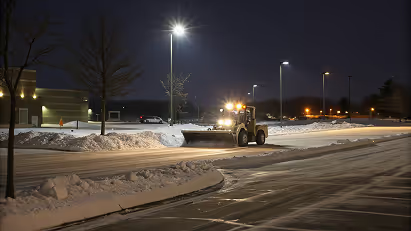
I have worked with crews on both sides of the county line, from Millcreek to North East and down toward Edinboro. The best teams share a few traits: they watch the radar like hawks, adjust routes as the lake bands shift, and treat each visit like their own driveway. The less impressive outfits show up late, push snow where it doesn’t belong, and leave jagged windrows that freeze into ridges. Choosing the right snow plow service in Erie County is less about flashy trucks and more about planning, communication, and discipline at 3 a.m.
What a dependable service looks like during Erie snow
The phrase “snow removal” covers a lot. You can get simple pass-through plowing or a comprehensive plan that keeps a property safe through a prolonged storm cycle. In Erie, the line between the two matters. Lake-effect events often come in waves over 12 to 36 hours, with lulls followed by sudden bursts. Without an adaptive schedule, your driveway can be cleared at 6 a.m. then buried again by the time you need to leave at noon.
Top crews in residential snow removal Erie PA think in intervals and thresholds. They’ll set trigger depths, usually 2 to 3 inches for standard driveways and 1 to 2 inches if a client needs medical access or works shifts. They run one sweep in the early morning, a midday cleanup if the band persists, and an evening tidy to keep things from icing overnight. That cadence prevents deep compaction and keeps vehicles from packing snow into polished ice. It also reduces strain on equipment, which means fewer breakdowns and more reliable service.
If they’re serious about quality, they also stake properties before the first accumulation. Those little orange or reflective markers save garden beds and masonry from blade bumps. Crews that skip staking often cause ruts along the edges of asphalt or upset the first few feet of a lawn, which then becomes a mess during spring thaw.
Plowing techniques that make a difference
A driveway is never just a rectangle. The way a driver approaches it can mean clean edges and a clear apron, or a mess of ridges and berms. In tight Erie city lots, where driveways run between houses with a narrow turn at the garage, a compact plow truck or skid-steer with a back-drag blade is worth its weight in salt. Crews that only push forward from the curb tend to leave a hard pan in front of the garage door. A back-drag removes that packed layer and keeps doors from freezing shut.
For wider suburban drives in Millcreek or Harborcreek, angled windrowing reduces time and fuel, but the operator has to think about where the snow ends up. Piling too close to the road invites the municipal plow to push it straight back into your apron. Piling too close to the house traps meltwater next to foundation walls. Good operators create a primary pile on the downwind side, with secondary spill zones that will not block sightlines. When we had a run of storms in January a few years back, the crews who preplanned their piles avoided losing driveway width. Others ran out of storage space and started stacking piles that encroached on walkways and mailboxes.
Edge control matters. A steel cutting edge on cold, newer blacktop can score the surface. Poly edges reduce gouging, though they can struggle on compacted snow over ice. A careful operator will mix equipment or adjust down pressure depending on the day. On rough, older surfaces with patched asphalt, I have seen rubber edges keep the gravel in place better than steel. The point is not to pick a single setup, but to match the edge to the surface and conditions.
Sidewalks, steps, and the liability you don’t want
Erie ordinances and HOA rules often require sidewalk clearing within a set time after snowfall. Beyond fines, the bigger risk is a slip-and-fall on a neighbor’s route or your front steps. Residential snow removal is not just about the driveway. Crews that offer full-service plans will include sidewalks and porch steps, and they bring the right tools for it: narrow push shovels for brick, a broom finish on lighter snow, and sidewalk-safe ice melt.
Salt choice matters. On concrete less than two winters old, rock salt can accelerate spalling. Calcium chloride works at lower temperatures, but can be harsh on vegetation and metals. Magnesium chloride is gentler but pricier. In Erie, where temperatures frequently flirt with the teens, a blended ice melt balances performance with less surface damage. A good crew will adjust application rates as the temperature drops, rather than blanket salting every visit. That saves you money and preserves your concrete.
Roof snow removal in Erie and when it is worth it
Roof management is the quiet piece of winter safety. Not every house needs roof snow removal in Erie. Most roofs can carry a significant load, especially if the snow is cold and fluffy. The trouble starts after repeated thaws and refreezes when layers turn dense and heavy. Ice dams form along the eaves as meltwater refreezes, pushing water back under shingles. If you notice thick ridges of ice at the edge and dampness or staining on interior ceilings near exterior walls, it is time to bring in a crew.
Roof work is not a DIY challenge on a icy Saturday morning. Even with a roof rake, you can damage shingles or pull gutters out of alignment if you rake upward or hook a seam. Professional roof snow removal in Erie usually relies on stand-off ladders, safety anchors, and rakes that pull snow downward without scraping the shingles. In bad ice-dam situations, teams may use low-temperature steamers to cut channels through ice rather than chiseling, which risks shingle damage. Expect them to clear 3 to 4 feet up from the eave to restore airflow above the soffit and give meltwater a path. Clearing the entire roof is rarely necessary and can be unsafe.
Communication beats equipment when storms stack up
You can rent a truck and mount a plow in a weekend. What you can’t fake is dispatch discipline. Erie PA snow plowing during a true lake-effect event demands flexible routing. Bands can park over Fairview while the city stays light, then swing east and bury Wesleyville. Crews that publish a static route and stick to it through changing conditions will be late for half their clients. The better approach is tiered routes, with priority stops for medical needs or early commutes, then an adaptive list for the rest as the band shifts.
Clients should expect text updates or app notifications. A simple message at 4:30 a.m. that says, “First pass complete, second pass targeted 1 p.m.,” reduces phone calls and keeps expectations real. When I evaluated crews last season, the top performers offered time windows instead of exact ETA promises during active snowfall, then hit their windows consistently. They also collected feedback after storms and adjusted triggers for individual driveways that drift.
Licensed and insured snow company, and why that line on the quote matters
Snow removal looks simple until someone slides into a garage door or pushes a pile onto a neighbor’s property. A licensed and insured snow company protects both the homeowner and the crew. Commercial auto coverage for plow trucks, general liability for property damage, and workers’ compensation are the baseline. If a service hesitates to provide proof, move on. I have seen claims run into the tens of thousands for a cracked garage façade or a downed fence line after an ice glaze. Insurance is not just paperwork, it is the promise that a mistake will not become a financial disaster.
In Erie County, look for a business registration in Pennsylvania, appropriate tax numbers, and a clear contract that spells out trigger depths, visit frequencies, what is included (driveway, sidewalks, steps, mailbox access), and what costs extra (salting, hauling, roof work). Contracts should define where snow will be staged. That clause prevents arguments when the city plow throws everything back and a neighbor complains about sightlines.
Driveway surfaces and how crews should adjust
Not every driveway wants the same touch. New asphalt can scar under aggressive scraping. Older asphalt can shed aggregate. Concrete spalls under heavy salt if it is young or poorly sealed. Pavers shift if a blade catches a high edge. Gravel quickly becomes a moonscape if you drop the blade too far. Experienced operators tailor their approach.
On asphalt less than six months old, raise the blade slightly and rely on multiple passes. On gravel, shoes on the blade are a must, and the crew should leave a thin layer of snow to keep stones in place. That thin layer can be sanded for traction instead of salted, since salt tends to sink and does little for traction on loose aggregate. On pavers, rubber or poly edges are worth the extra pass time. If a client has radiant heat in the driveway, the plan changes entirely: the service may shift to light brooming and targeted salting of transitions where heat ends to prevent ridge ice.
When freeze-thaw cycles set in around late February, those end-of-driveway ridges become a real hazard. A good crew will come back for a quick cleanup after the municipal pass even if the trigger depth is not met. Once that ridge freezes, it takes three times the effort to break and remove it, and it becomes a tire-eating curb in the dark.
Residential snow removal versus commercial snow removal in Erie PA
The gear looks similar, but the job is different. Commercial snow removal in Erie PA revolves around opening times, ADA compliance, parking lot traffic, and slip hazards near entrances. Crews run heavier equipment, focus on lot clearing first, and commit to de-icing cycles that start before a storm and continue after it ends. They may run multiple salt blends, carry walk-behind spreaders for entryways, and use pushers on skid-steers to reduce passes.
Residential snow removal puts a premium on timing around commute hours, driveway apron cleanup, and gentle care around landscaping. The routes are tighter, often requiring more backing, more hand work, and more attention to storage piles. When a company claims expertise in both, ask for references from each side. I have seen crew leaders run tight commercial routes and then take on too many homes, only to let their residential clients wait until midday. The better companies partition teams so each segment gets the attention it needs.
When to add salting and what to expect
Salt is not a cure-all in Erie. It works best on new snowfall at temperatures above roughly 15 Fahrenheit. Below that, calcium or magnesium blends carry the load, but they cost more and may sting lawns and metal steps. The most effective approach is pretreatment on known ice spots before a storm, then light application after plowing to break the bond. Over-salting tends to backfire, creating brine that refreezes into a glassy surface when temperatures drop overnight.
.avif)
Expect a clear explanation on salting costs. Some companies fold a set number of applications into the seasonal rate. Others bill per event. If you get charged for salting, you should see a uniform pattern, not a few stripes down the center. On sidewalks, broadcast evenly and avoid clumping near pets’ paths. Many homeowners ask for pet-safe ice melt near side entries while using standard blends on the driveway.
Seasonal contract or per-push, and how to think about the math
Erie’s winter is famously variable. Some years deliver 60 to 80 inches, others blast past 100. A per-push agreement looks cheap during a mild season and brutal during a snowy one. Seasonal contracts even out the cost and ensure priority routing. Top crews will cap the number of visits under normal weather patterns, then define a surcharge policy if an extraordinary season blows past historic averages. turfmgtsvc.com roof snow removal erie That keeps a small business solvent when the snow just keeps coming.
When comparing options, track not just price per visit but trigger depth, mid-storm passes, and apron cleanup after city plows. A $35 pass that skips the apron can cost you a missed shift when the road plow buries your exit. A $55 pass with apron service and a deep-winter rescrape saves time and aggravation. Ask how the company handles back-to-back storms. Some will come after each 2-inch increment, others wait for a break. In Erie’s banding, the increment plan usually wins.

What separates top-rated crews from the rest
Reputation travels fast after a big storm. Homeowners talk, and photos of clean driveways next to rutted ones make the rounds. The best snow plowing teams in Erie share a handful of habits that you can spot before you sign:
- They stake properties early, mark hazards like low utilities and curb edges, and document pile locations with photos. They offer clear trigger depths and time windows for service during active snowfall, then communicate before and after each pass. They tailor equipment to the property, using back-drag blades for garage aprons, blade shoes for gravel, and the right cutting edge for the surface. They provide proof of insurance and a detailed contract that explains what is included, how salting works, and how they handle prolonged storms. They track storms in real time, adjust routes as lake-effect bands shift, and run a second pass to clear municipal berms without being asked.
A morning during a heavy band, as it really plays out
Around 3:15 a.m., radar shows a narrow but intense band forming off the lake, feeding straight down I-79. The crew lead pings the team: start route B, bump priority houses near West 38th and Zuck, shift one truck east by 7 a.m. because the band is edging toward the city. Drivers top off with treated salt. First passes begin at a cautious pace, blades riding a half inch high in case yesterday’s melt left slush re-frozen underneath. Radios crackle about a tight driveway near a retaining wall on the lower west side. The operator back-drags, lifts early to avoid the wall, then pushes left to a storage pile they chose in November when the lawn was still visible.
By 5:45 a.m., a line of municipal plows rolls down the cross streets, throwing berms against every apron. The crew doubles back. Quick touch-up passes clear those ridges before commuters throw them into ice hills with the first tire tracks. A few clients opted for pretreatment, so a driver walks out a sidewalk spreader, keeping pellets off the garden bed that borders the stoop. Temperatures fall to 17, so the team switches from standard rock salt to a blend that remains effective. They text updates to clients who asked for notifications. When the band shifts toward Harborcreek near midday, the dispatch pivots. One truck stays on the west side to handle drifts along open fields, where crosswinds pack powder into hard slabs. Another picks up the route along the Bayfront slope, where sun hits the pavement for an hour and then slides behind clouds, causing flash refreezes.
What you notice most is not the size of the trucks but the rhythm. Plow, check apron, clear mailbox access, light salt on the shaded patch near the side door, move. It is methodical, less dramatic than you might expect, and that’s the point.
Why pile placement determines how February feels
The worst call I get in midwinter is from someone whose driveway has narrowed to a single lane because piles were dropped too close to the edges in December. When frequent bands stack up, snow storage becomes a chess game. Early in the season, push piles farther back than feels necessary. Use a wide, flat base rather than a towering cone, which tends to slough back into the drive. Keep piles below the line of sight at the road where possible. If you live on a corner, avoid piling near the stop sign, or you will hear about it from neighbors and possibly from the city.
Think about melt paths. If you pile in front of a low point on the lawn, the thaw will run across the drive and refreeze at night. A good crew reads the grade and uses natural swales to carry meltwater away. On sloped drives, consider a shoulder cut along one edge early in winter, essentially creating a mini-ditch to capture meltwater so it does not cross the wheel path. It takes an extra pass, but you will notice the difference when the freeze arrives after sunset.
Safety for crews and for homeowners
We talk about equipment and logistics, but the job is people. Operators spend long hours in the dark, in blowing snow, dodging parked cars and recycling bins. Good companies rotate drivers, schedule quick warm-ups, and maintain equipment so the only surprises are weather-driven, not mechanical. Homeowners can make life easier by pulling bins off the driveway the night before a storm, parking as far up or down the drive as possible to give turning space, and keeping porch lights on. If you have a dog run along the side of the house, let the crew know so they do not push snow against the gate.
For homeowners who still shovel between visits, use a light, wide shovel and push rather than lift when you can. Take small bites from the edge when clearing a plow berm. If you salt by hand, keep the spreader dry, or you will clog it. And if you are tempted to climb on the roof to knock down an ice dam, call a professional. A short delay costs less than a fall.
Choosing your snow plow service in Erie County
Take a weekend in early November to collect quotes. Look for companies that ask questions about your schedule, not just square footage. Do you need early clearance on weekdays? Do you have a parent with mobility challenges? Does the school bus stop at your driveway? Those details shape a service plan. Ask for two to three local references within your neighborhood or a nearby one with similar street plowing patterns. Municipal schedules affect apron berms, and local crews know which streets are last to be cleared.
If you split your time between Erie and out of town, make sure your crew offers photo confirmation after visits. It is a small thing that makes a big difference when you are watching a storm from a distance. For payment, many good operators accept seasonal prepay with a small discount. That arrangement helps them fuel and maintain equipment before the snow flies.
A note on equipment: trucks, skid-steers, and the right tool for the job
Most residential routes run three-quarter-ton trucks with 7.5 to 8.5 foot plows. V-blades are handy when snow exceeds 8 inches, allowing the driver to break a path without spilling over the blade. Straight blades with wings work well on mid-depth snow and reduce pass count on wider drives. Skid-steers shine on tight cul-de-sacs or shared drives where maneuvering matters more than speed. UTVs with plows are perfect for long sidewalks and narrow alleys common in older Erie neighborhoods.
Maintenance is the hidden variable. A plow is only as good as its wiring harness and hydraulic pump on a 12-degree morning. Top crews carry spare hoses, cutting edges, and solenoids. They grease pivot points between storms and check for loose mounts that cause chatter and uneven scraping. Homeowners don’t see that work, but they feel it when a crew stays on schedule through a cold snap.
When commercial capacity helps the neighborhood
Even if you only need residential service, there is value in a provider that also runs commercial routes, as long as they staff for both. Commercial snow removal often requires a pre-storm deployment of anti-icing liquid on lots. That experience with timing and materials can translate to better sidewalk treatment at your home. Fleet depth also means a backup truck if one goes down. The risk is over-commitment on storm days when retail lots open early. During your interview, ask how they balance. The best answer is a dedicated residential team, not a promise to “fit you in between lots.”
How to handle special cases: steep drives, shared access, and travel
Steep drives benefit from a two-part approach: early scraping before compaction, then a sand-salt blend for traction. Some crews carry cinders, which bite better than salt alone at low temperatures. For shared drives, get everyone on the same contract or at least the same company. Conflicting pile placements and salting habits cause friction that lasts longer than winter. If you travel, ask about storm checks. A quick pass after a wind event can prevent drifts from sealing your garage door shut. Many crews offer vacation watch add-ons that include clearing the walkway to show occupancy and avoid citation.
What happens after the season
The job is not finished when the last flurry melts. A responsible snow company schedules a spring visit to repair lawn scuffs along the drive, reset displaced edging, and remove any marker stakes. They may rake out sand accumulation near the apron and offer to seal minor cuts on asphalt after the surface warms. These touches cost little, but they signal a crew that sees the work as a year-long relationship, not a winter transaction.
Final thoughts from a long Erie winter
Erie rewards preparation and patience. The storms will come in clusters, the municipal plow will bury your apron at least twice during the season, and the lake will surprise you on a quiet afternoon. With the right partner, these become manageable inconveniences rather than household crises. Look for a team that treats snow removal as a craft, not a scramble. When you find a good one, stick with them. Reliable snow removal in Erie PA is not just about clear pavement. It is about the routines that keep a home safe, a driveway usable, and a winter more livable.
Turf Management Services 3645 W Lake Rd #2, Erie, PA 16505 (814) 833-8898 3RXM+96 Erie, Pennsylvania